
Best Way to Remove a Beehive From a House
The best method depends on whether you have a temporary swarm or an established colony. When honeycomb is established inside a wall, roof, soffit, chimney or other cavity, complete removal usually means locating the colony, creating safe access, removing the bees and accessible honeycomb, cleaning the cavity, sealing entry points and repairing the structure.
25+ Years Experience • Same-Day Service • Structural Repairs • 2-Year Guarantee
25+ Years Experience • Same-Day Service • 24/7 Emergency Response • Structural Repairs • 2-Year Guarantee
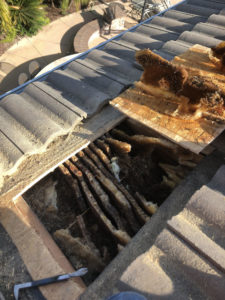
First: Is It a Swarm or an Established Hive?
A swarm is a cluster of bees traveling with a queen while searching for a permanent nesting site. Once bees settle inside a building cavity and begin building comb, the situation changes.
Time alone should not decide whether a wall or roof needs to be opened. Colony activity, location, visible comb, history and inspection findings all matter.
What Complete Structural Beehive Removal Looks Like
1. Locate the Colony
Trace activity and identify where the colony is likely established.
2. Choose the Best Access
Exterior access is often preferred, but the safest and least-destructive route depends on the structure.
3. Remove Bees & Comb
Remove the colony and accessible honeycomb instead of treating only the entrance.
4. Clean the Cavity
Address remaining hive material and residue as appropriate.
5. Seal Entry Points
Correct openings that allowed bees to enter.
6. Repair the Structure
Repair roofing, stucco, drywall or other material opened during removal.
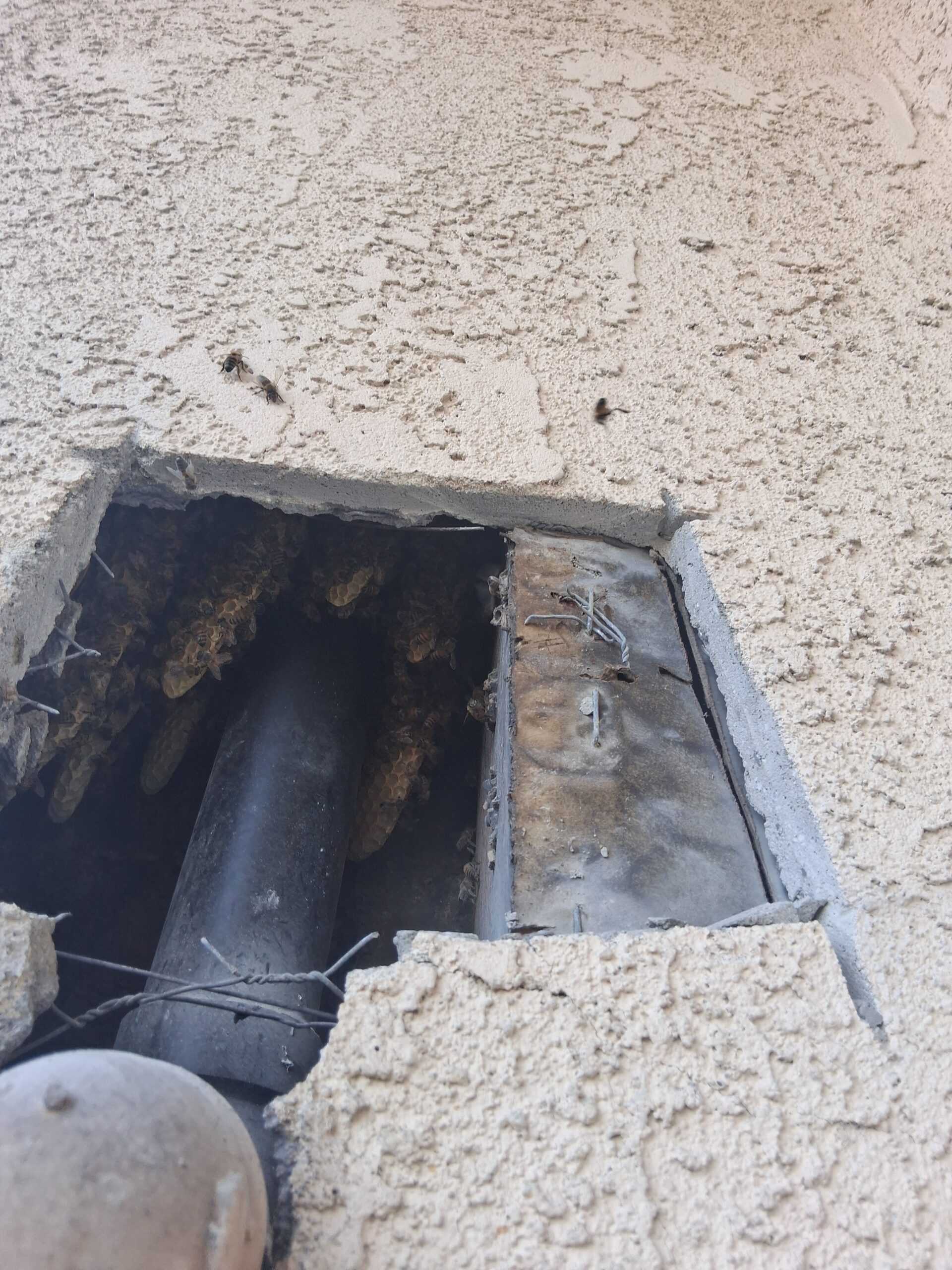
Beehive Inside a Wall
The entrance is not always directly beside the comb. We trace activity and locate the colony before creating access. Exterior access often helps keep bees, honey and debris outside the living space, but every structure is different.
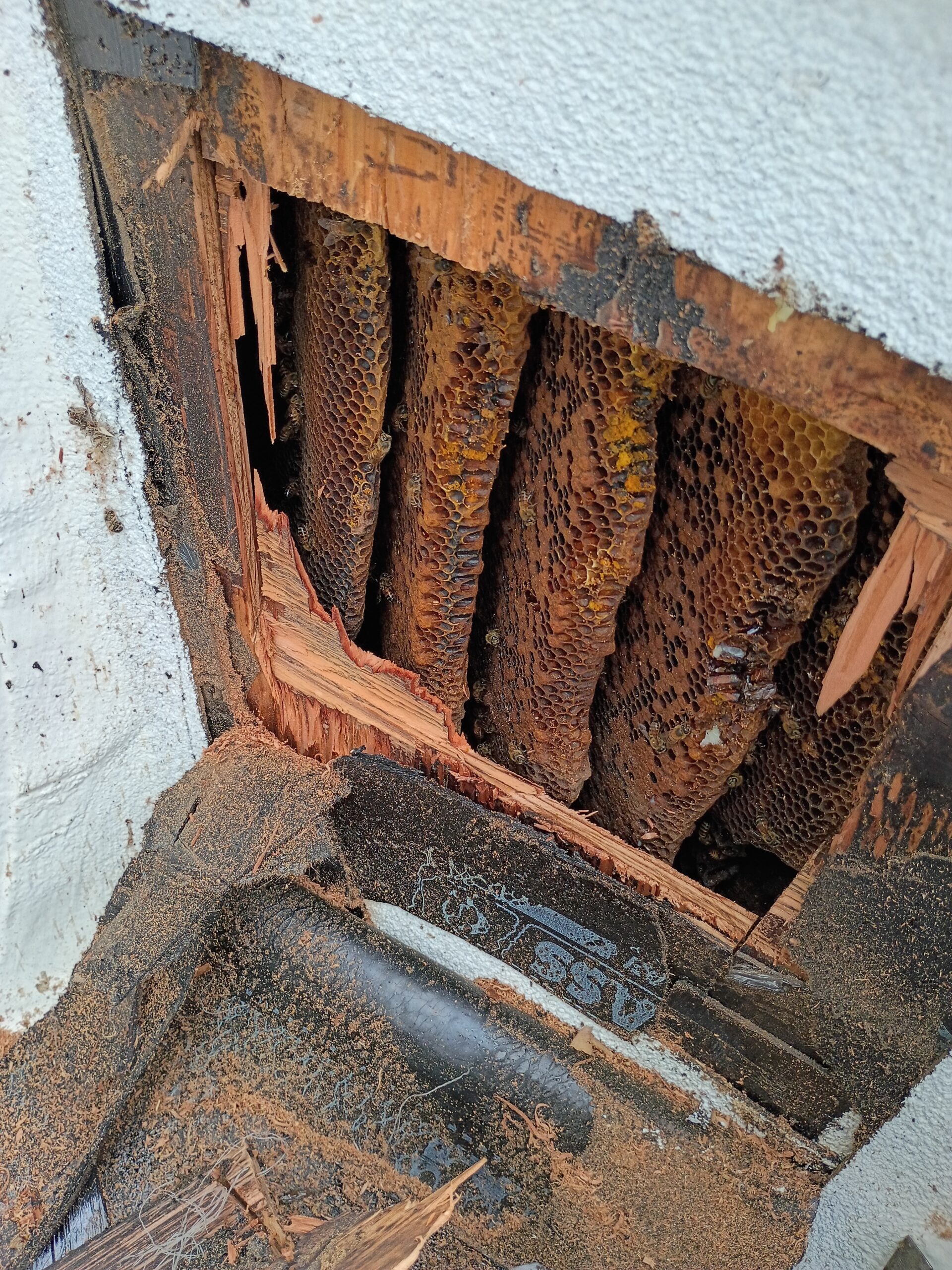
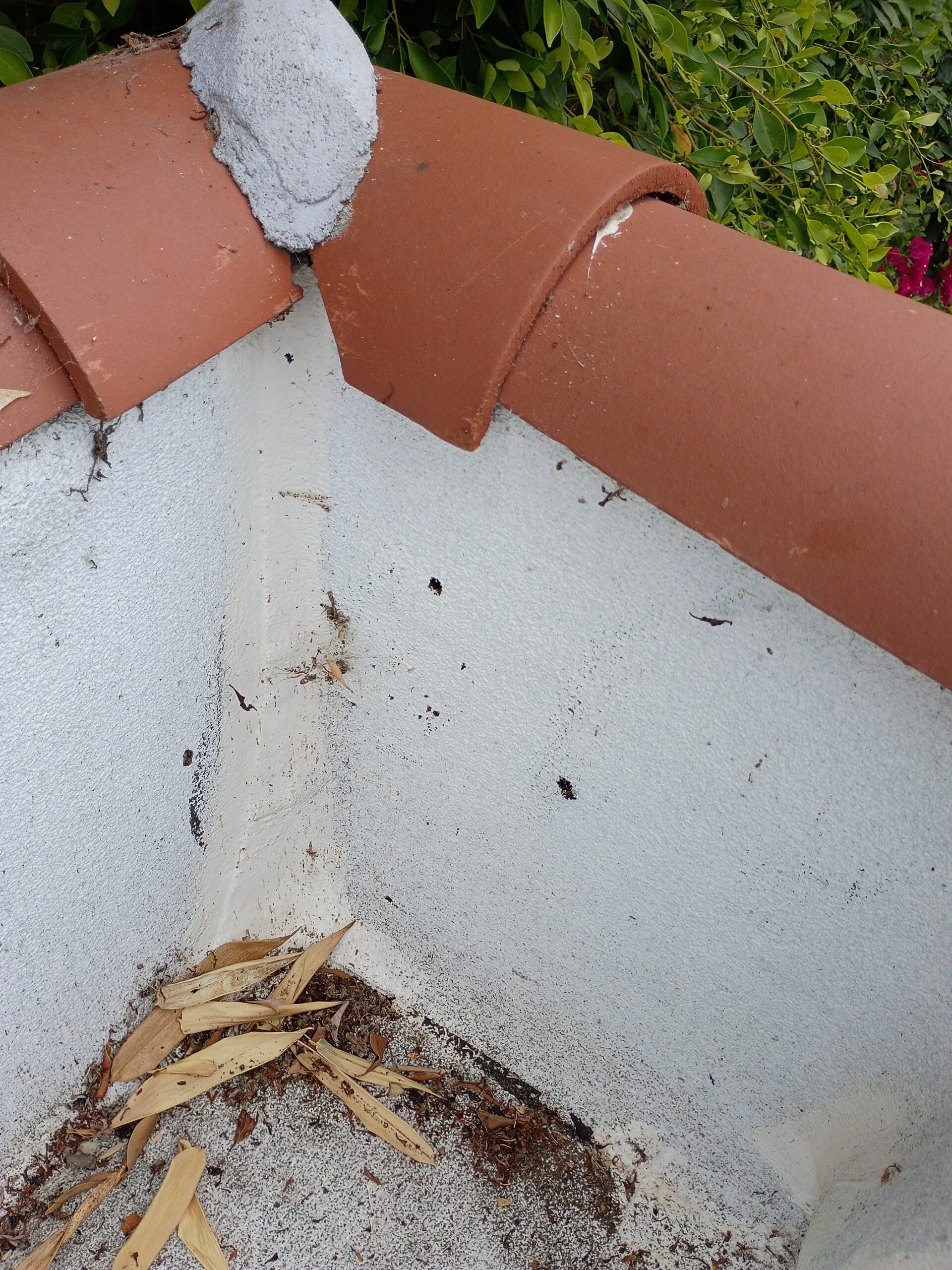
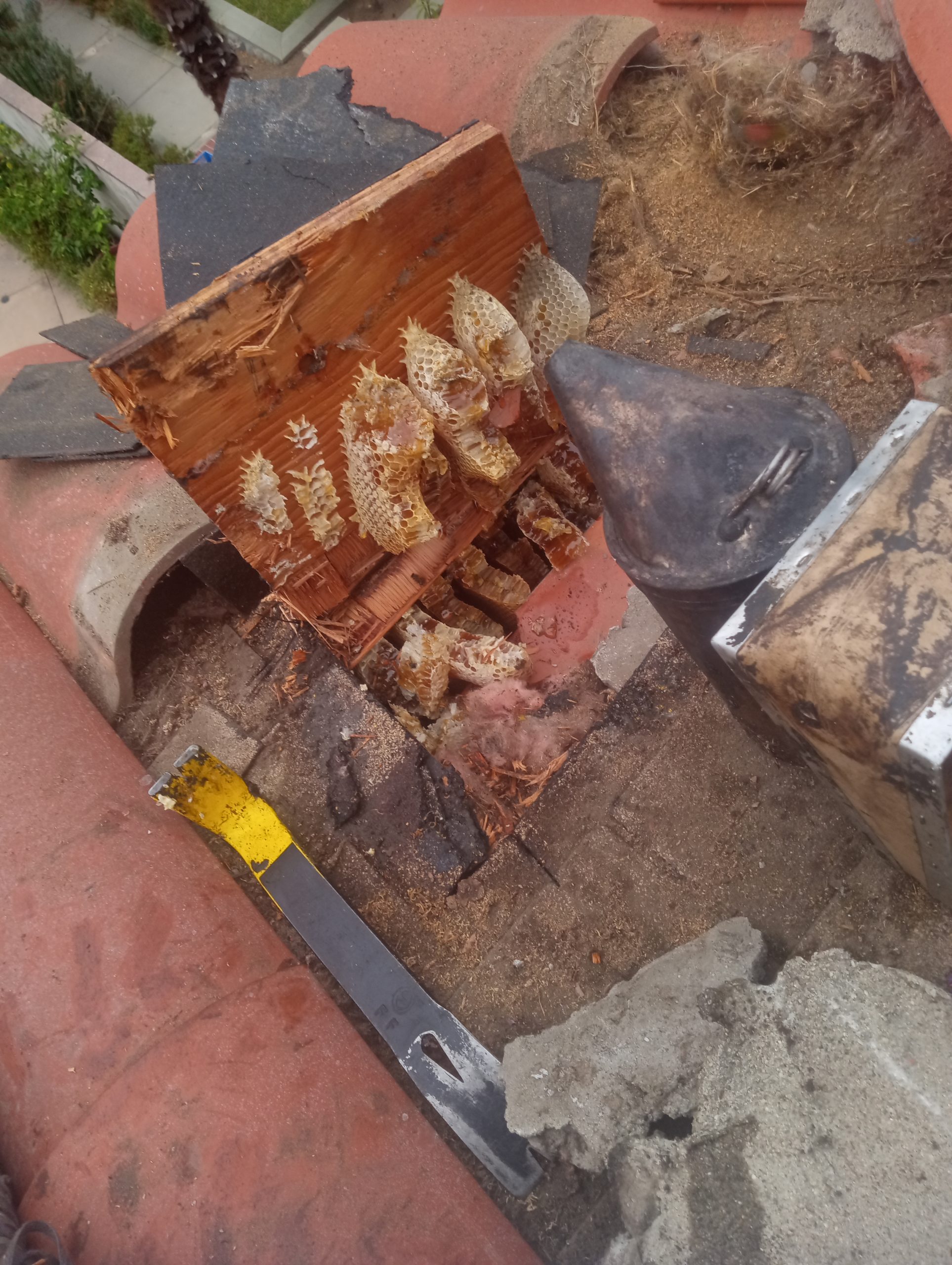
Beehive Inside a Roof
Roof colonies may establish beneath shingles or tile, behind fascia, near eaves or inside roof cavities. Attic access is not automatically best; heat, footing, utilities and hive position affect the safest route.
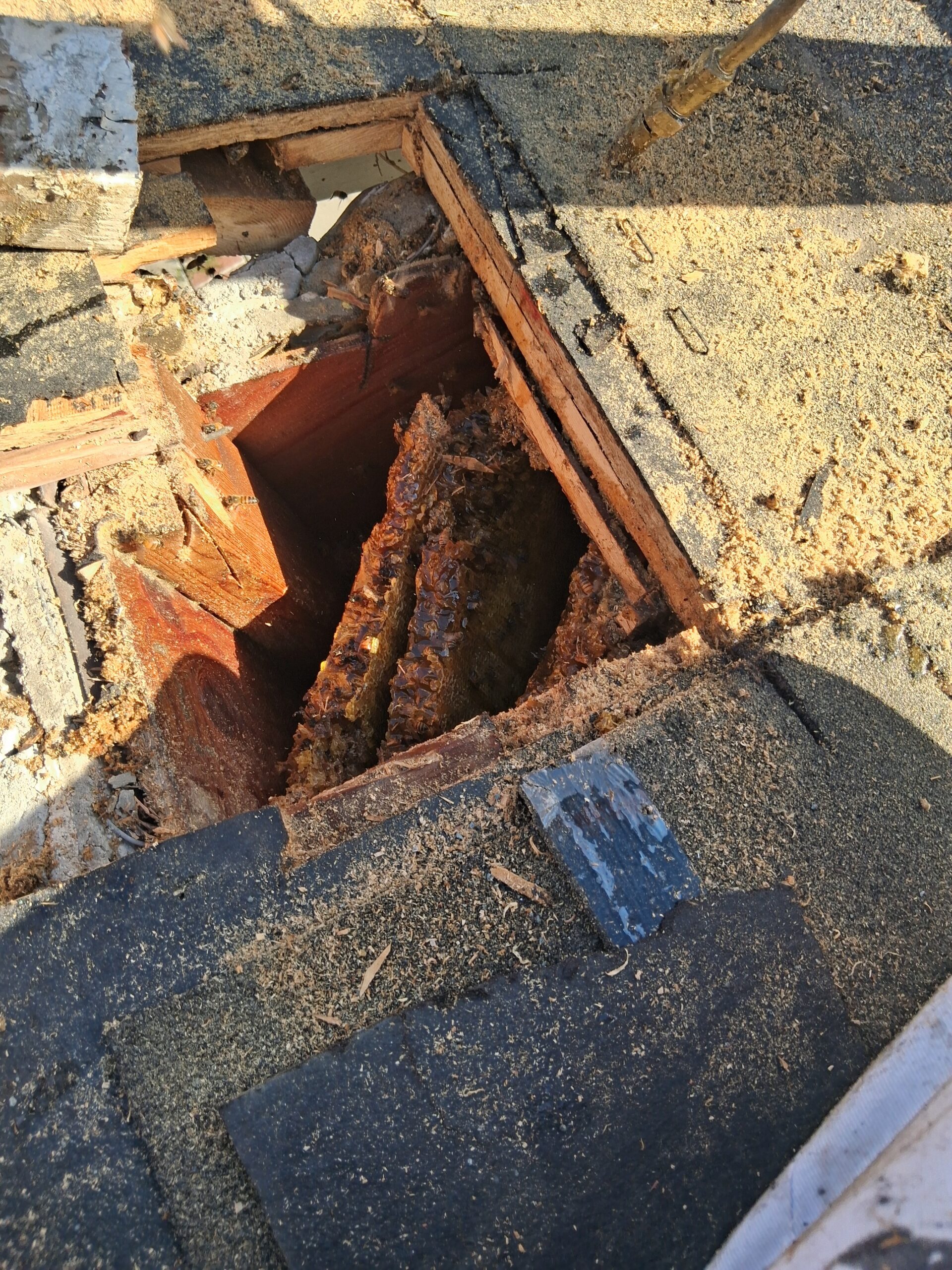
Beehive Under a Floor, Porch or Deck
Restricted crawl-space access can make removal difficult. The technician should choose the route that provides safe control of bees and hive material while minimizing property damage.
Why Spraying the Entrance Is Not the Same as Removing a Hive
With an established structural colony, killing visible bees does not physically remove wax, honey, brood comb or hive residue. Leftover material can leak, attract pests and leave the cavity attractive to future bees. APA Bee Removal focuses on the colony and the cavity, not only the bees flying outside.
When Does a Wall or Roof Need to Be Opened?
There is no reliable rule that says every colony must be opened after a certain number of days. A technician should evaluate activity, colony location, evidence of comb and infestation history. We do not want to open a structure unnecessarily. But when an established hive and accessible comb are inside the building, physical removal can be the most complete solution.
Ask for before-and-after photos whenever structural hive removal is performed.
Repairs Are Part of Proper Structural Removal
Opening a roof or wall is only half the job. APA Bee Removal can repair access areas after removal, including common roofing, stucco and drywall openings.
Can the Bees Be Removed Alive?
Whenever colony temperament, location and access make it practical and safe, live removal and relocation may be possible. Aggressive behavior, prior pesticide exposure, inaccessible placement or immediate safety concerns can require another approach.
What Homeowners Should Not Do
Don't Seal an Active Entrance
Trapping an active colony inside can force bees to search for another exit.
Don't Assume Smoke Solves It
Smoke does not remove established honeycomb from a wall or roof.
Don't Start Cutting Blindly
Opening the wrong area creates unnecessary damage and may expose occupants to defensive bees.
Don't Pay for Unnecessary Demolition
The hive should be located as accurately as possible before structural access.
 Posted on Google
 Richi3 Rich
Trustindex verifies that the original source of the review is Google.
APA Bee Removal Company did an outstanding job removing a hive from our property. Their team was professional, responsive, and clearly experienced—they handled everything safely and efficiently from start to finish. They took the time to explain the process, answered all my questions, and made sure the area was clean and secure afterward. I really appreciated their attention to detail and commitment to great service. Highly recommend them to anyone needing fast, reliable hive removal!Posted on Google Tony LagunasI would definitely recommend APA bee removal to whoever needs a beehive removed. I am out of town at this moment and was informed that there where lots of bees flying around the front part of my home and neighbors where staring to get worried. I called APA about one hour later there technician Alex was there and removed a beehive from inside the wall. He answered all my questions and sent my pics and video of the process. The best part was I didn't even have to be ther which made my day! Awsome experience with this company!!Posted on Google
 Lisa SmithAfter having the bees in my roof for about a few years, it was time to take care of my bee problem. So I called the APA Bee Removal around 9 AM and 3 hours later, the beehive was removed and my roof repaired. I waited until it rained to make sure there was no leaks before I posted this review. The process was quick and easier than I expected. Iam amazed he knew exactly where to open. I woukd highly recommend APA!!Posted on Google
 Mj BrooksI was helping a local elder neighbor with clearing out overgrown weeds, grass, and trees in his backyard and came across a beehive that was very active with bees inside an old shop vac where they turned into a very large beehive and as I was cutting down the weeds they became aggressive and I was stung numeras times. And I had to stop working and figure out a solution and in search I came across APA bee removal and I called Cecilia answered and was very pleasant when talking to her and explained they situation with the beehive and and the home owner is an elder on a limited income and today we worked together and having the hive removed from the yard and the tech was very quick on containing and removing the hive and explaining the expectations over the next few days and they took into consideration the owners limited income and gave an exceptional discounted rate for the service. The professionalism and care from APA staff is a huge blessing and greatly appreciated the service they provided. Thank you again for your help, stay blessed always!Posted on Google
 Frank TiscarenoThe removal expert did a great job today. Answered all of my questions during the removal process. He has 25 years of experience and it showed. I even got some of the honey.Posted on Google
 Jane WangI found 4 wasp nests at my backdoor and window. I googled beekeeper and found APA BEE REMOVAL. A beekeeper came over 1.5 hous after I gave them a call on weekend. He is quick and efficient. The nests were removed completely and I was told that I have a warranty period of 30 days. I was charged $200 for the service. I appreciate the proficiency and quick responsiveness from APA BEE REMOVAL. I recommend them if you happen to encounter the similar problem for your house.Posted on Google
 Ana GabrielCame to my parents home for 4th of July. Notice where bees going in the roof area of the garage. Alex so awsome, friendly and very knowledgeable. came removed the bees and also did the repair. Iam so happy because i hought we would have a hardtime to find someone on a holiday and to respond so quickly. the process was so easy.Posted on Google
 Sue OCampoOn May 26, 2025, we saw a bee swarm in our orange tree.. called this company and they were out to our house within hours to remove it.. he was so nice and professional.. as of this morning no more bee.. hats off look at the size of the bee swarm Thank you so muchPosted on Google
 Jadali Momof3He was great. Very professional friendly, and kept us informed of everything he had to do He worked fast and got the job done in about two hours Would definitely use them againPosted on Google
 Michael ArevaloCalled them at one in the morning. They were here within an hour. Quick service friendly will definitely use them again.!
Beehive Removal Questions
Locate the colony, choose safe access, remove bees and accessible comb, clean the cavity, seal entry points and repair the access area.
No. Structural access depends on whether an established hive is present, its location and the appropriate removal method.
Comb building can begin after a colony settles, but the amount varies. Time alone should not determine whether demolition is necessary.
Spraying visible bees does not physically remove established honeycomb or honey inside a structure.
Exterior access is often useful, but the best route depends on colony position, building materials, repair requirements and safety.
Yes. APA Bee Removal can repair structural access created during qualifying hive-removal work.
Qualifying structural hive-removal work is backed by a 2-year written guarantee for the treated area.
Need a Beehive Removed From Your Home?
Send photos or video of the bee activity. We can help determine whether you have a temporary swarm or an established structural hive and explain the appropriate next step.
Serving the San Gabriel Valley and surrounding Los Angeles County communities.