
San Gabriel Valley Pricing Guide
How Much Does Bee Removal Cost in 2026?
Most homeowners pay between $150 and $1,000. But that range is nearly useless without context. A swarm on a tree branch and a colony inside your wall are not the same job — not even close.
The numbers below reflect what jobs actually cost in 2026, drawn from real quotes and published data across the San Gabriel Valley.
How Much Does Bee Removal Cost in 2026?
In 2026, the average cost for professional bee removal ranges from $150 to $500 for an accessible outdoor swarm, and $500 to $1,500+ for complex structural cutouts inside walls or roofs. Final pricing depends on the size of the hive, its location, and the extent of any required property repairs.
2026 Bee Removal Cost at a Glance
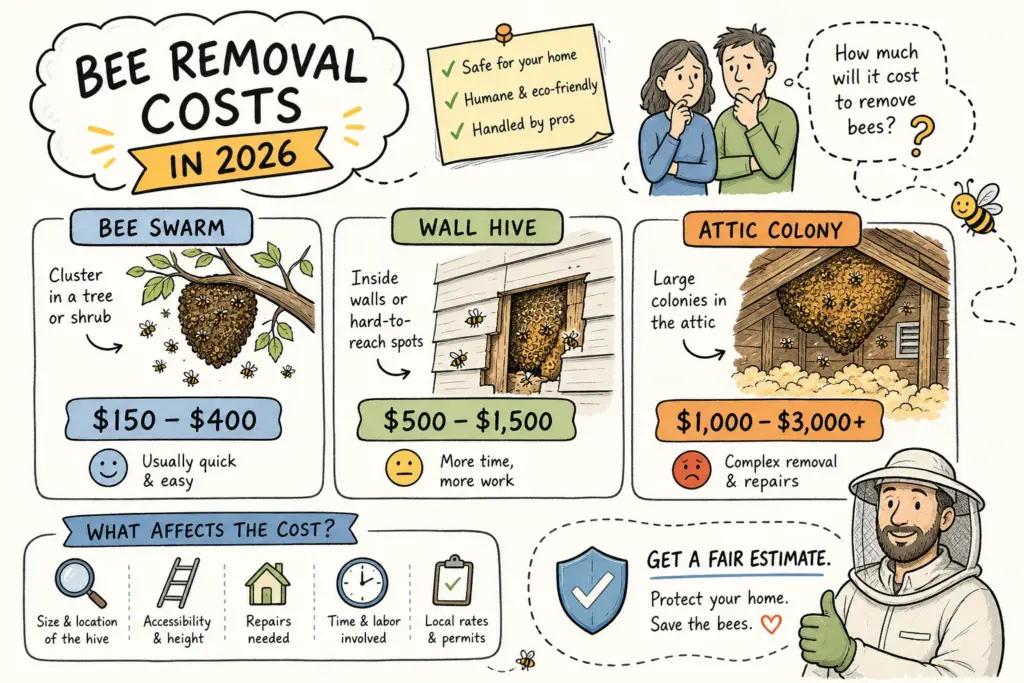
Bee removal costs in 2026 range from free for accessible swarms to $3,000+ for large attic colonies requiring structural repair.
Bee Swarm
Cluster in a tree or shrub — bees in transit, no comb built yet
Usually quick & easy
- Often free from local beekeepers
- No structural access needed
- Same-day resolution common
- Live relocation almost always possible
Wall Hive
Inside walls or hard-to-reach structural spots — comb has been built
More time, more work
- Structural opening required
- Full comb extraction essential
- Pheromone treatment of void
- Repair work adds to total cost
Attic Colony
Large established colony in attic, roof, or chimney — complex removal
Complex removal & repairs
- Larger colonies, more comb
- Equipment may be required
- Repairs can be extensive
- Requires licensed specialist
Swarms vs. Established Colonies: Not the Same Job
This is the most important distinction to understand before you call anyone.
A bee swarm is a temporary cluster of bees in transit. The colony has left its original hive and stopped to rest while scouts search for a new home. They have not built comb, they have not reared brood, and they will likely move on within 24–72 hours. This is the easiest and cheapest situation — often free when a local beekeeper is available.
An established colony is a completely different job. These bees have been somewhere long enough to build honeycomb, lay eggs, and raise young. They will not leave on their own. Removing them requires physically extracting comb and bees — not just vacuuming up a cluster.
If bees have been using the same entry point for more than 72 hours, assume it is an established colony — not a swarm. The cost difference is significant.
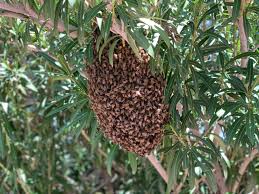
Quick Identification Guide
| Swarm 🌿 | Colony 🧱 |
|---|---|
| Hanging cluster | Bees entering a hole/gap |
| Arrived recently | Active for days or weeks |
| No buzzing inside walls | Buzzing sound in wall |
| No visible comb | May see wax or honey seeping |
| Free – $400 | $500 – $3,000+ |
How Location Drives the Cost to Remove Bees
Where the bees are located is the single biggest factor in your final price. Here is a complete breakdown from easiest to most complex:
| Location | Description | Price Range | Difficulty |
|---|---|---|---|
| Hanging Swarm | Free-hanging cluster on fence, branch, or low surface | Free – $200 | 😊 Easy |
| Yard / Shrub Hive | Ground-level or accessible outdoor location with comb built | $200 – $650 | 😊 Easy–Moderate |
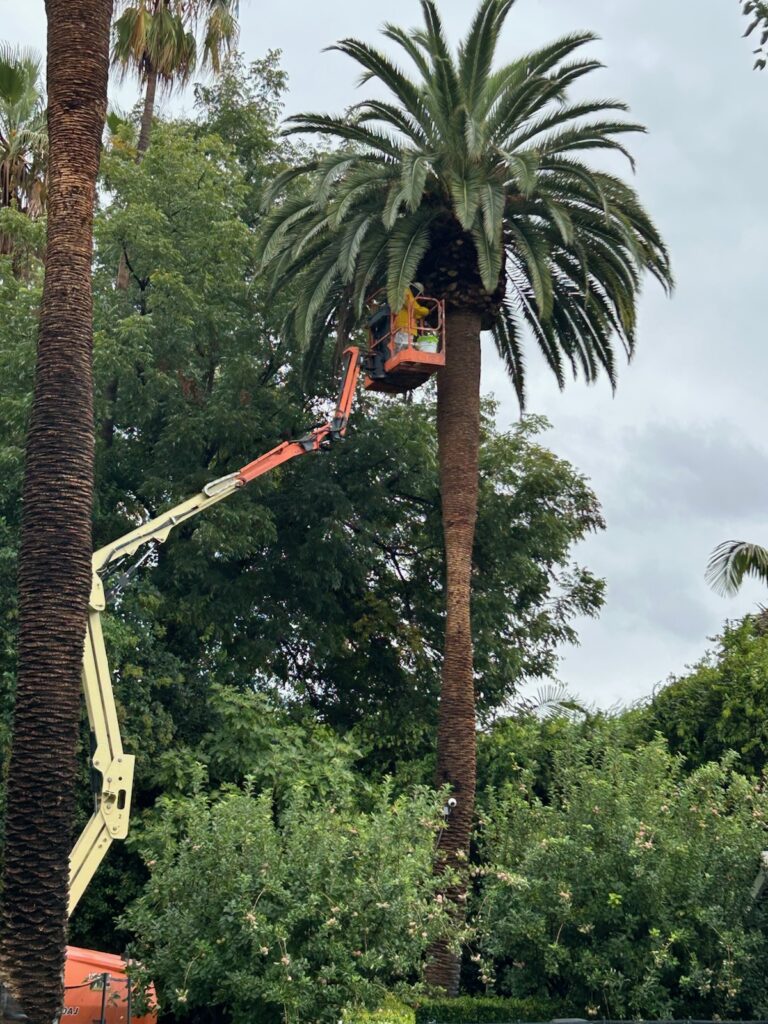
| High Tree / Equipment Needed | Hive in tree requiring tall ladder or lift equipment | $600 – $1,400 | 😐 Moderate–Hard |
| Wall or Soffit | Colony inside wall cavity or soffit — structural access required | $800 – $2,000 | 😐 Hard |
| Attic Colony | Large established colony in attic — more room to expand | $1,000 – $2,500 | 😟 Very Hard |
| Roofline / Multi-Story | Requires staging equipment, lift, or multiple-story access | $1,500 – $3,000+ | 😟 Most Complex |
For a deeper breakdown of our local pricing, see our Cost of Bee Removal page. For structural removals specifically, read our guide on Structural Beehive Removal.
The Factors That Push a Quote Higher Than Expected
Base price ranges give you a starting point. What actually determines your final number is a set of factors most people don’t think to ask about until they’re already holding a quote they didn’t expect.
Access Difficulty — The Biggest Variable
A hive inside a wall can cost three to five times more than the same-size hive in a yard shrub. Access surcharges alone add 20%–50% on top of a base quote before structural repairs are factored in.
Colony Size
Small hives run $75–$200 for removal. Large established hives can exceed $500 before any structural work begins. Larger colonies take longer and produce more debris that must be properly disposed of.
Africanized Bee Species
Africanized bees are common throughout Southern California and the San Gabriel Valley. These jobs require specialized gear and greater care during extraction — typically starting around $375 and reaching $1,600 for complex situations.
Seasonal Timing
Spring and summer are peak bee season. Demand drives prices up 20%–30% during those months. The same job in late fall or winter will likely cost less.
What Affects the Cost?
- 🔍 Size & location of the hive
- 🪜 Accessibility & height
- 🔧 Structural repairs needed
- ⏱️ Time & labor involved
- 🐝 Bee species (Africanized vs. European)
- 📅 Season & local demand
Live Relocation vs. Extermination — Which Is Actually Cheaper?
This question comes up on almost every call. The answer is more nuanced than most homeowners expect. Neither option is universally cheaper — it depends on what you are dealing with and how you measure cost.
💀 Extermination
- Cheaper upfront for established colonies
- Kills bees but leaves honeycomb inside wall
- Comb melts in heat — damages drywall, attracts rodents
- Pheromones invite next swarm back to same spot
- Often requires a second service call within months
⚠️ Usually costs more over 2–3 years
🐝 Live Relocation
- Higher upfront for structural jobs
- Bees, comb, and honey all physically removed
- Void treated for pheromones
- Entry points sealed — no re-infestation
- Often free for simple swarms from beekeepers
✅ Almost always lower cost over time
When bees are exterminated in place, the honey and comb stay inside the wall — attracting ants, rodents, and new swarms. Learn more about our live bee relocation service →
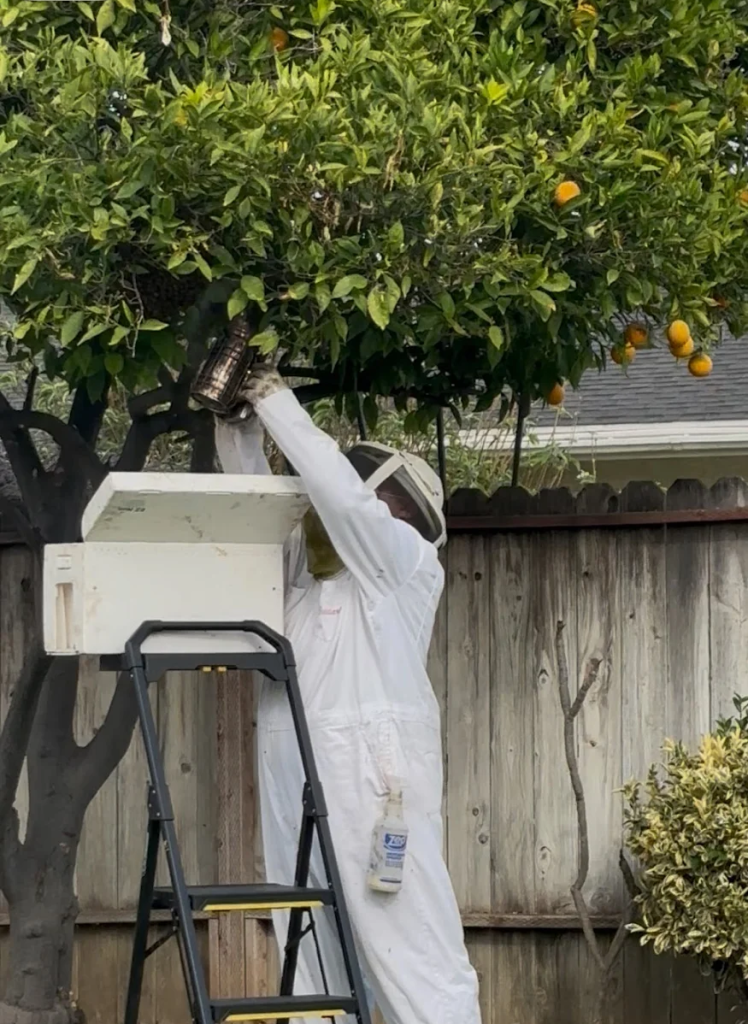
When Free Removal Qualifies
- ✅ Free-hanging swarm, no comb built
- ✅ Reachable without special equipment
- ✅ Confirmed swarm — not an established colony
- ✅ A $20–$50 donation for fuel is appreciated
When Free Removal Ends
- ❌ Bees are inside a structure
- ❌ Requires cutting, climbing, or equipment
- ❌ Colony has built comb
When Beekeepers Remove Bees for Free — And When They Won't
Free removal is real. It is also limited to a fairly specific set of circumstances, and knowing those limits saves you time and frustration before you start calling around.
Beekeepers will take a swarm at no charge when it is free-hanging, reachable without special equipment, and confirmed to be a swarm rather than an established colony. The bees have value to them for their own apiaries, so the job pays for itself in live bees.
The moment bees are inside a structure — a wall, a tree cavity, or anywhere that requires cutting, climbing, or specialized equipment — free removal is off the table. At that point, you need a licensed contractor. Structural removal requires safety equipment, access work, proper disposal of comb and honey, and sealing to prevent re-entry.
Not sure if it’s a swarm or a colony?
Call us and describe what you’re seeing. We’ll tell you over the phone — for free — before you commit to anything.
📞 (626) 336-1373
Wall and Attic Colony Costs — What to Really Expect
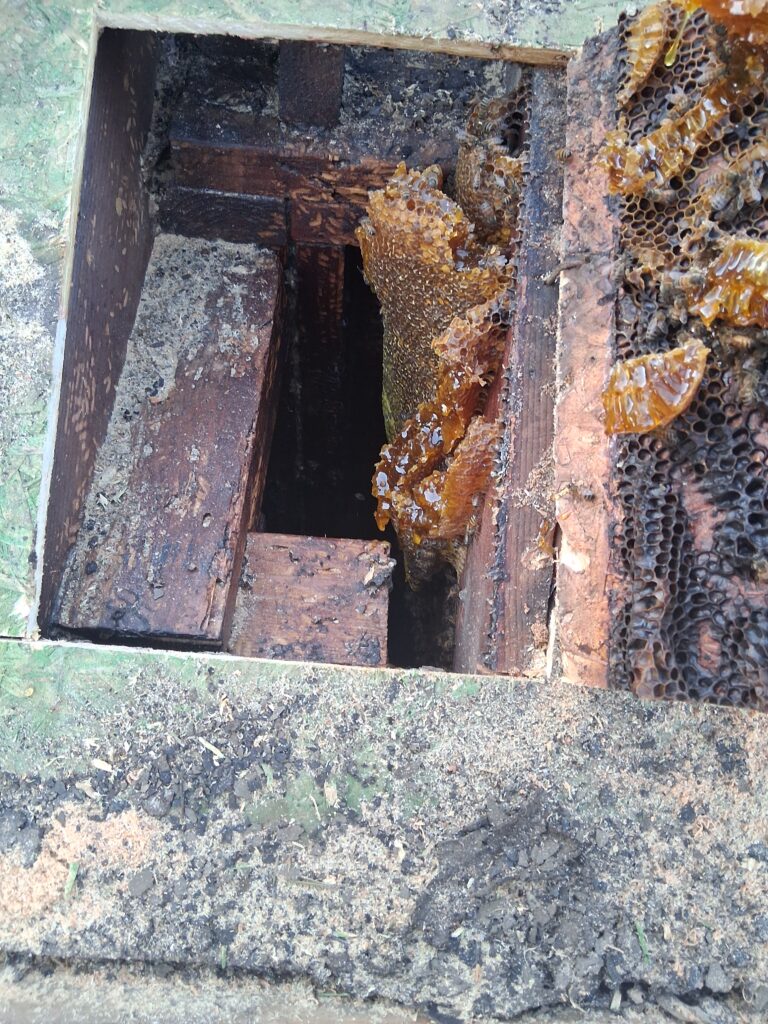
Structural bee removal is the job that catches homeowners off guard, both in how complex it is and what it actually costs. If you have discovered bees coming and going from a gap in your siding or a soffit vent, this is likely the situation you are facing.
The Removal Cost
Wall or attic bee removal typically runs $800 to $2,500 in 2026. That range reflects real labor:
- Cutting into drywall or siding to reach the colony
- Extracting the bees, queen, brood, and every piece of comb
- Treating the cavity with enzyme to neutralize pheromones
- Sealing all entry points to prevent re-entry
Attic jobs trend toward the higher end because colonies have more room to expand. Roofline removals that require lift equipment add equipment fees on top of the base labor cost.
The Repair Bill That Comes After
Removal cost and repair cost are two separate line items — and this surprises a lot of people. Once the bees are out, the access point needs to be properly closed.
| Drywall repair | $275 – $750 |
| Honey damage repair | $300 – $1,200 |
| Mold remediation | $500 – $2,000+ |
| Stucco repair / match | $200 – $600 |
At APA Bee Removal, we handle repairs ourselves — you do not need to hire a separate contractor. Always ask upfront whether a quote covers repairs or only the removal itself.
Questions to Ask Before You Hire Anyone
Knowing the price ranges puts you ahead of most callers. Knowing what to ask before signing anything is what actually protects you from a bad deal.
Get clear answers to these before you commit to any company:
- 01Does the quote include comb removal and cavity sealing, or just the bees?
- 02Are structural repairs included, or quoted separately?
- 03What happens if bees return within 90 days, 6 months, or 1 year?
- 04Is the company licensed and insured for structural work?
- 05Do they offer live relocation, or only extermination?
Any company that cannot answer these clearly is worth reconsidering. Vague answers on guarantee terms are especially telling.
Why a Service Guarantee Saves Money
A lower quote with no guarantee can cost more than a higher quote backed by one.
APA Bee Removal’s 2-Year Guarantee
Every structural removal includes a 2-year service guarantee. If bees return through the same entry point within that window, we fix it at no additional charge. That commitment reflects confidence in the quality of our sealing and repair work.
When you are comparing quotes, the guarantee terms deserve as much attention as the price itself. A second service call from a company with no guarantee will cost you full price again — and you will be back where you started.
What National Averages Actually Show
Published cost data for 2026 shows these national benchmarks:
HomeGuide Average
$550Lawn Love Average
$445Yelp Median Quote
$295Typical Range
$350–$550These national averages include a mix of swarms and simple outdoor hives. Wall and structural jobs pull the average up significantly — your local quote may differ based on access, colony size, and Africanized bee status. Source: HomeGuide | Lawn Love
Bee Removal Cost FAQ
Common questions about bee removal pricing in the San Gabriel Valley. For more specific questions, contact us directly or call (626) 336-1373.
The national average ranges from $350 to $550 for a typical job. In the San Gabriel Valley, swarm removal runs $150–$400, wall hive removal runs $500–$1,500, and attic colony removal runs $1,000–$3,000+. The biggest variable is whether the bees are accessible or inside a structure.
Standard homeowners insurance policies typically do not cover bee removal as a standalone service. However, if bees have caused structural damage — rotted wood, honey-soaked drywall, compromised framing — that damage may qualify under dwelling coverage. We can provide a written assessment for insurance purposes if needed.
If both are quoting on the same situation, the $200 quote almost certainly does not include comb removal, pheromone treatment, or structural repairs. These are the steps that prevent re-infestation. Ask both companies specifically: does this quote include extraction of all honeycomb, treatment of the cavity, and sealing of the entry point?
Wall hive removal in 2026 typically runs $500–$1,500 for the removal itself, plus $275–$750 for drywall or stucco repair. If the colony has been there long enough to cause honey damage or moisture issues, repair costs can climb higher. We always quote removal and repair together so there are no surprises.
Yes. Africanized bee jobs require specialized gear, additional safety precautions, and more careful extraction techniques. These jobs typically start around $375 and can reach $1,600 for complex structural situations. Alex Pruitt is State of California Certified as an Africanized Honey Bee expert.
Every structural removal includes: complete extraction of bees, queen, brood, honeycomb, and honey; enzyme treatment of the void space to neutralize pheromones; sealing of all entry points; structural repair of the access opening; and a 2-year written guarantee. Swarm removals include live relocation when possible.
If bees are consistently entering and exiting through the same gap or hole, you have an established colony — not a swarm. If you can hear buzzing inside a wall, or if the activity has been happening for more than 72 hours, it is a colony. Call us and describe what you are seeing — we will tell you over the phone what you are dealing with, free of charge.
Yes. We provide free phone estimates on every job. Call or text (626) 336-1373, describe what you are seeing, and send a photo if you can. In most cases Alex can give you an accurate estimate before driving out.
The Bottom Line on Bee Removal Pricing
Know which situation you are dealing with before you call anyone. A swarm on a branch is a completely different job than a colony in your attic, and treating them as equivalent will either leave you overpaying for a simple job or unprepared for what a complex one actually costs.
Swarm
Free – $400
Wall / Structure
$500 – $2,500
Attic / Roofline
$1,000 – $3,000+
See also: Cost of Bee Removal | Structural Removal Guide | All Services | Service Area
Get a Straight Answer on What Your Job Will Cost
You do not need to guess. Call or text us a description and a photo of what you are seeing. In most cases Alex can diagnose the situation and give you an accurate estimate right over the phone — free, no commitment.
✓ Available 24/7 ✓ Free Estimates ✓ 2-Year Written Guarantee ✓ Licensed & Insured ✓ Serving 25+ San Gabriel Valley Cities