
Bees in Your Chimney? Don’t Light the Fireplace.
Professional chimney bee removal, hive extraction, honeycomb cleanup and bee proofing throughout the San Gabriel Valley.
If bees are entering through your chimney, fireplace or flue, leave the fireplace off and have the colony located before heat or smoke makes the problem worse.
25+ Years Experience • Same-Day Service • 24/7 Emergency Response • Structural Repairs • 2-Year Guarantee
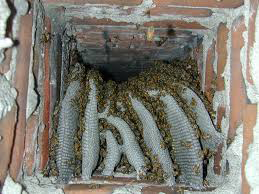
Bees getting into your home through the chimney is one of the most common ways a colony moves in — and one of the easiest problems to make worse with the wrong DIY fix. Here’s what actually works.
Seeing Bees Inside Near a Window or Skylight? Check the Chimney.
When a swarm enters a chimney, some bees may become separated from the colony and follow daylight toward windows or skylights. Other signs include heavy activity around the chimney cap, buzzing near the fireplace, or bees repeatedly appearing indoors.
Do not assume they are only passing through. Once comb is being built, the problem has changed from a temporary swarm into an established hive.
The #1 Mistake: Lighting a Fire
Smoke may sound like an easy way to force bees out, but a fireplace is not a reliable bee-removal method. With an established colony, heat can create more problems instead of solving the infestation.
Bees May Simply Wait
Bees may remain around the chimney and return after the fire goes out.
Wax & Honey Can Melt
An established hive can contain wax and honey that may soften or melt from heat.
Bees Can Move Toward the House
Disturbing a colony may send defensive or disoriented bees toward interior openings.
The Hive Material Remains
Even if adult bees leave, comb, honey and colony odor can remain inside.
A Chimney Hive Isn’t Just a Bee Problem
An established colony may contain bees, brood, wax, pollen, honey and comb. Removing only the flying bees can leave the material that caused the structural problem.
Proper removal may require access near the chimney, roofline, chase, wall cavity or fireplace area. The goal is to locate the hive, remove accessible comb and honey, clean the former hive area, address entry points and repair access created for removal.
Possible Signs of an Established Hive
- Constant traffic at the chimney
- Buzzing that continues for days
- Bees repeatedly appearing indoors
- Honey or staining near the fireplace
- Activity returning to the same opening
- A swarm that moved into the chimney and disappeared
What to Do When Bees Are in Your Chimney
1. Keep the Fireplace Off
Do not light a wood or gas fire or block the active entrance.
2. Keep People & Pets Away
Avoid disturbing the chimney area while the colony is active.
3. Call or Text Us
Send photos or video when possible.
4. Locate the Colony
We determine whether it is a temporary swarm or established hive.
5. Remove Bees & Accessible Comb
The method depends on colony location, structure, access and safety.
6. Clean, Seal & Repair
We address the hive area, entry points and structural access created for removal.
Swarm or Established Chimney Hive?
New swarm: Bees may have just arrived and may not have built significant comb. Early response gives more options for live removal.
Established hive: Repeated activity over time can mean the colony has settled in and begun building comb. Structural access may be needed for complete removal.
Why Chimney Bee Removal Requires Experience
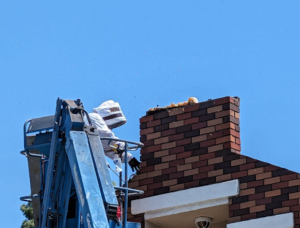
Chimneys can hide colonies around the flue, inside a chimney chase, beneath flashing, near the roofline or in an adjacent wall cavity. The opening where bees enter is not always where the hive is located. APA Bee Removal specializes in structural bee removal, accessible honeycomb removal, entry-point sealing and repairs when structural access is required.
Chimney Bee Removal FAQs
Leave the fireplace off until the colony is evaluated. Heat and smoke do not reliably remove an established hive.
Do not seal an active exterior entrance with the colony still inside.
Yes. Established colonies can build comb and store honey in or around chimney cavities.
Removing accessible hive material is an important part of structural hive removal.
When location, temperament and access allow safe live removal, relocation may be possible.
When structural access is created, APA Bee Removal can repair the area opened.
Same-day service is available, with 24/7 emergency response for urgent situations.
Need Help With Bees in Your Chimney?
Don’t light the fireplace and hope the problem disappears. Let us determine whether you have a new swarm or an established hive and explain the safest removal approach.
Serving the San Gabriel Valley and surrounding Los Angeles County communities.